Table of contents
When it comes to home design, especially regarding interior elements like staircases, having a concrete understanding of the components involved can significantly enhance your ability to make informed decisions. Whether you’re looking to enhance an existing staircase or create a new one, a grasp of common staircase terminology is essential. You may know the difference between steps and railings, but terms like treads, risers, stringers, and balusters might still be unfamiliar. This guide will elucidate those terms for a deeper understanding of staircase anatomy, allowing you to better communicate your vision to designers and contractors.
The Components of a Staircase
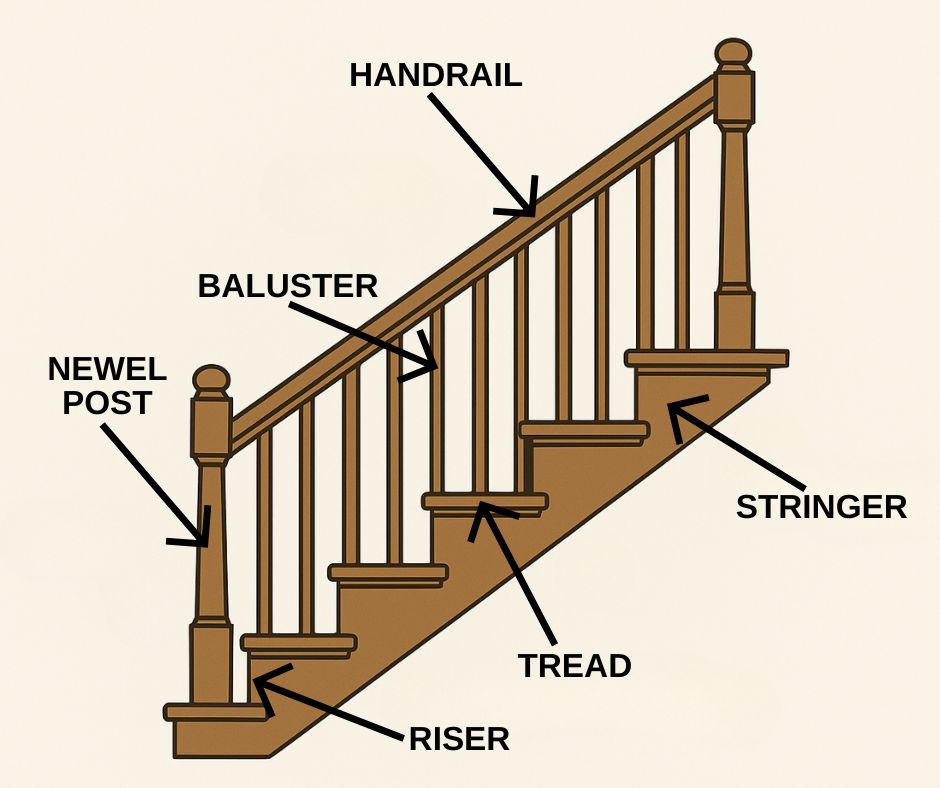
A staircase consists of several crucial components. Understanding each element ensures that you have a comprehensive perspective when discussing your needs and preferences. Let’s dive into the primary components of a staircase, exploring their functions and importance in design.
Treads
The treads are one of the most prominent parts of a staircase. They provide the flat, horizontal surfaces that you step on as you ascend or descend. Treads are typically made from a variety of materials, including wood, metal, and even stone. The choice of material can significantly affect both the aesthetic and functional characteristics of the staircase.
Material Considerations for Treads
- Wood: A classic choice that offers warmth and aesthetic appeal. Different types of wood, such as oak, maple, or cherry, can provide diverse looks and finishes. Wood treads can be stained or painted to match your overall interior design.
- Metal: Often used in modern or industrial-style homes, metal treads can be more durable than wood and offer a contemporary look. Materials like steel or aluminum can withstand considerable wear and tear.
- Carpeting: Adding carpeting to your treads can enhance comfort and provide additional safety by reducing the likelihood of slipping, particularly in homes with children or elderly residents.
Risers
The risers are the vertical components of the stairs that sit between the treads. While treads are the surfaces you step on, risers serve to connect each tread and contribute to the overall height of the staircase. The height of each riser is referred to as the rise. Understanding the rise is key to maintaining a comfortable and safe angle for stair use.
Riser Variations and Their Impact on Design
- Closed Risers: These are typically installed in traditional staircases, providing a solid back to each step. They can enhance the stability of the staircase and offer a more classic look.
- Open Risers: Common in contemporary and modern designs, open risers allow for visibility through the staircase, which can create a sense of openness in a space. However, they may not be suitable for every home, especially where safety is a concern, as they can increase the risk of slipping or falling.
Stringers
Stringers are the structural components of a staircase that hold the treads and risers in place. These are typically located on either side of the staircase and are essential for the stability of the entire structure.
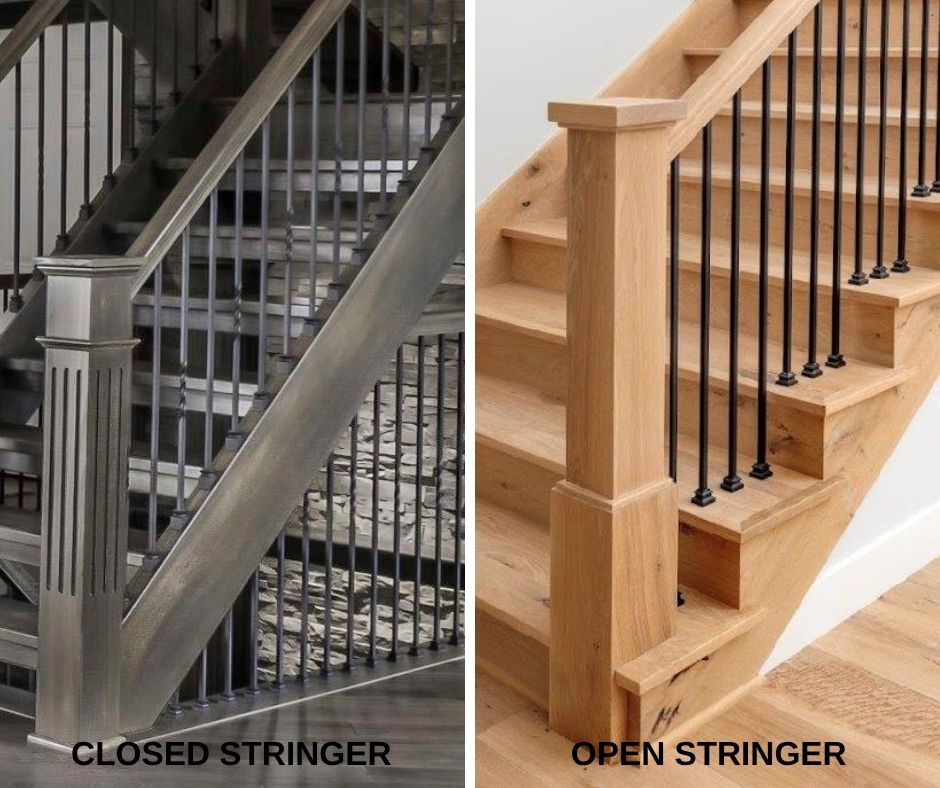
Types of Stringers
- Closed Stringers: With closed stringers, the edges of the treads and risers are hidden, creating a clean, finished look. This option is often favored for traditional staircases since it provides a polished aesthetic.
- Open Stringers: Open stringers showcase the outline of the steps and can contribute to a more airy and modern appearance. However, they may require more careful alignment and design considerations to ensure stability and safety.
Newel Posts & Balusters
The newel posts and balusters are key components that connect the handrails to the staircase structure. They serve both functional and decorative purposes.
Newel Posts
Newel posts are the larger, more substantial vertical elements that provide support at key points along the staircase. They are typically found at the beginning and end of a staircase, as well as at any landings. Because of their size and prominence, newel posts are often customized to match the design aesthetic of the staircase and surrounding décor.
-
Sale!
 InfoBuy
This product has multiple variants. The options may be chosen on the product page
InfoBuy
This product has multiple variants. The options may be chosen on the product page
Square Top Wood Baluster 5067
Price range: $7.17 through $41.70 -
Sale!
 InfoBuy
This product has multiple variants. The options may be chosen on the product page
InfoBuy
This product has multiple variants. The options may be chosen on the product page
Pin Top Wood Baluster 2025
Price range: $13.84 through $69.46 -
Sale!
 InfoBuy
This product has multiple variants. The options may be chosen on the product page
InfoBuy
This product has multiple variants. The options may be chosen on the product page
Box Newel Plain 4375
Price range: $135.56 through $528.69
Balusters (Spindles)
Balusters, also known as spindles, are the smaller vertical pieces that fit between the newel posts and support the handrails. They come in an array of materials, including wood and iron, giving you ample opportunity for customization. Balusters play a crucial role in ensuring the safety of the staircase, preventing falls while adding character to the overall design.
Handrails
Understanding the various types of handrails and their shapes allows for greater freedom in customizing your design. Whether opting for a traditional, modern, or eclectic look, each element can be tailored to reflect your personal style and functional requirements, ensuring that your staircase not only serves its purpose but also enhances the overall aesthetic of your space.
Types of Handrails
- Straight Handrails: are the most common type, providing a simple, linear design that runs parallel to the staircase. The straightforward design makes them a versatile choice for both traditional and modern interiors.
- Bending Handrails: feature curves or bends, allowing them to follow the contours of a staircase or landing. Bending handrails can add a dynamic and elegant touch to the design, making them a popular choice in grand staircases or curved architecture
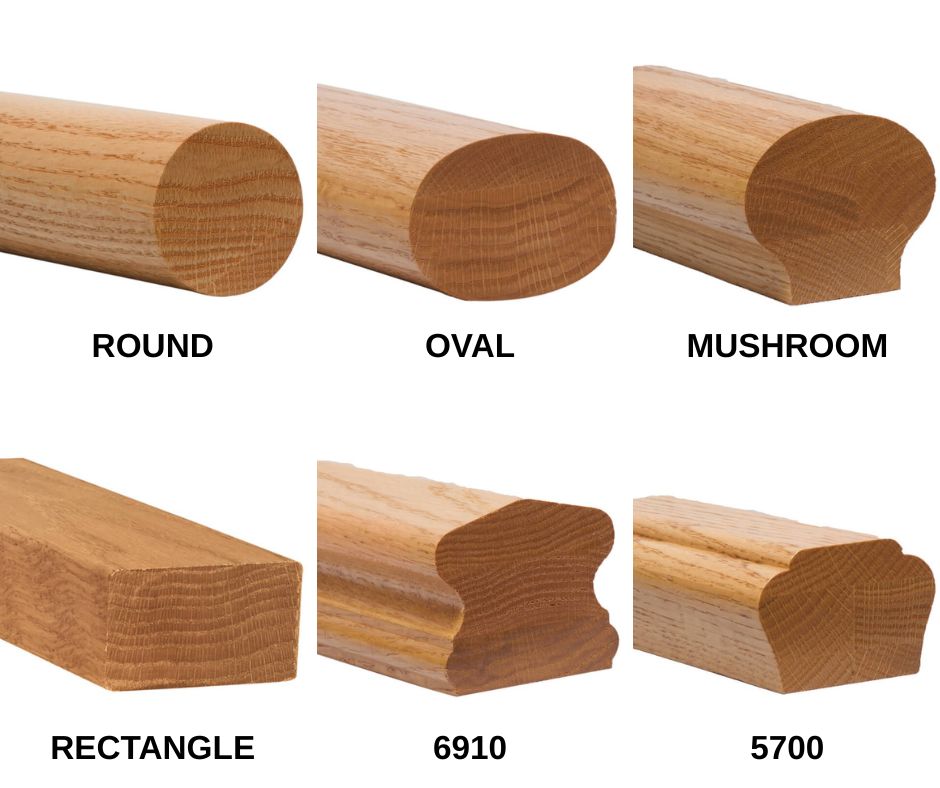
Handrail Profiles
- Round Handrails: are commonly used for their ergonomic shape and comfortable grip. They provide a classic look that fits seamlessly into various design styles, from traditional to contemporary. The smooth contours make them a practical choice for safety while offering a timeless appeal.
- Oval Handrails: offer a unique aesthetic that distinguishes them from standard round options. This shape provides a slightly more modern feel while maintaining a comfortable grip. Oval handrails can add a distinctive flair, making them suitable for eclectic or contemporary designs.
- Mushroom Handrails: have a distinctive rounded top that resembles the cap of a mushroom. This unique style adds artistic flair and can be an interesting focal point in a staircase design. They are often found in more traditional or whimsical homes and provide a comfortable grip.
- Rectangular: have a flat profile, offering a sleek and modern appearance. This shape is often used in contemporary designs, providing a minimalist look that can be very striking. Rectangular handrails can be made from various materials, including wood and metal, allowing for creative expression in design.
- Unique and Intricate Handrails: feature unique shapes, detailed carvings, designs, or embellishments, reflecting craftsmanship and attention to detail. These handrails can transform a simple staircase into a work of art, often suited for traditional or luxurious settings. They can highlight the architectural style of a home while also enhancing safety by providing secure grip points.
Enhancing Your Space with Staircase Design
Customization and Aesthetic Appeal
Understanding these key staircase components allows you greater freedom in customizing your design. Whether opting for a traditional, modern, or eclectic look, each element can be tailored to reflect your personal style.
- Color and Finish: The color of your treads, risers, newel posts, and balusters can dramatically affect the ambiance of your staircase. Light colors can make a space feel larger and more open, while dark shades add a sense of elegance and coziness.
- Material Choices: Wood and metal are ideal materials for staircases. Both are durable and aesthetically pleasing. Using a combination of both materials can create a clean, modern look.
- Staircase Type: Various staircase types and shapes offer unique features. Making an informed decision about the type of staircase you choose can enhance both the aesthetic appeal and functionality of your home.
- Decorative Elements: Consider adding decorative elements like intricate carvings on your newel posts or unique designs on your balusters to further personalize your staircase.
Understanding Building Codes and Regulations
Before embarking on your staircase project, familiarize yourself with local building codes and regulations. These codes often dictate the required dimensions for treads, risers, and spacing between balusters. Adhering to these regulations is crucial for ensuring the safety and legality of your staircase construction.
Communicating with Contractors and Designers
Equipped with knowledge of staircase terminology and components, you can effectively communicate your needs and preferences to contractors and designers. Discussing specific terms helps clarify your vision and allows professionals to offer tailored solutions that suit your style and requirements.
Maintenance and Care of Your Staircase
Once you’ve designed and constructed your ideal staircase, regular maintenance will be key to preserving its beauty and functionality. Depending on the materials you’ve chosen, your maintenance routine may vary:
- Wood Treads and Risers: Regularly clean and polish wood surfaces to prevent scuffing and keep them looking fresh. Periodically check for loose treads or signs of wear that may require repairs.
- Metal Components: Keep metal treads and balusters free of rust and corrosion by cleaning them with appropriate solutions. Ensure that they remain properly secured to avoid accidents.
- Carpeted Treads: Vacuum carpets regularly to maintain cleanliness and check for any fraying or damage that may require replacement or repair.
Conclusion
Understanding the anatomy of a staircase is essential for anyone considering an upgrade or new installation. With knowledge of components such as treads, risers, stringers, newel posts, and balusters, you can ensure that your staircase not only meets your aesthetic preferences but also maintains safety and functionality.
By taking the time to discuss your ideas and wishes with contractors and designers using the right terminology, you’ll empower them to bring your vision to life. Whether you’re drawn to the classical elegance of a traditional staircase or the sleek lines of a modern rendition, grasping the fundamental elements of style and safety will lead you to a staircase that complements your home beautifully, proves functional for your lifestyle, and stands the test of time.