Table of contents
- What Are Wood Stair Handrails?
- Benefits of Wood Stair Handrails
- Popular Wood Species for Stair Handrails
- Choosing the Right Wood Handrail Profile
- How Wood Handrails Work With Other Staircase Components
- How to Choose the Best Wood Stair Handrail for Your Home
- Where Can I Buy High-Quality Wood Stair Handrails Online?
- Which Companies Make the Best Interior Wood Handrails for Stairs?
- Can You Replace a Wood Stair Handrail Without Replacing the Entire Staircase?
- Maintaining Wood Stair Handrails
- Upgrade Your Staircase With the Right Wood Handrail
Wood stair handrails are an important part of any staircase, combining safety, comfort, and timeless style. Whether you’re building a new home, renovating an existing staircase, or replacing an outdated railing, the right wood handrail can enhance your interior while providing reliable support for years to come.
With so many wood species, handrail profiles, finishes, and design options available, choosing the right handrail may seem overwhelming at first. Understanding the differences between materials, styles, and installation requirements can help you make an informed decision that complements your home and meets your project’s needs.
In this guide, we’ll explore the benefits of wood stair handrails, popular wood species and styles, how to select the right handrail for your staircase, and what to consider when shopping for high-quality wood handrails online.
What Are Wood Stair Handrails?
A wood stair handrail is the horizontal or sloping rail that provides a stable surface to grip while walking up or down a staircase. Handrails are typically installed along one or both sides of a staircase and are supported by newel posts, balusters, brackets, or other structural components, depending on the design.
Although handrails are sometimes confused with stair railings, the terms describe different parts of a staircase. A handrail is the portion designed to be grasped for support. A railing or balustrade is the larger assembly that may include the handrail, balusters, and newel posts.
Wood handrails are popular in residential interiors because they offer a natural appearance, a comfortable feel, and considerable design flexibility. They can complement traditional homes, contemporary interiors, rustic spaces, and transitional designs.
Benefits of Wood Stair Handrails
Wood remains a popular choice for interior stair handrails because it combines natural beauty, durability, and versatility. With a wide range of wood species, profiles, and finishes available, homeowners can find a handrail that complements their interior design while providing a comfortable, reliable grip for everyday use.
Timeless Appearance
Wood has a natural warmth and character that works with a wide range of interior design styles. A traditional handrail with decorative details can complement a classic staircase, while a streamlined profile can create a clean, modern appearance.
Because wood is available in different species, colors, grain patterns, and finishes, homeowners can customize the look to suit their existing flooring, cabinetry, trim, and other architectural details.
Durability and Long-Term Value
Quality hardwood handrails can provide years of dependable service when properly selected, installed, and maintained. Hardwoods such as oak, hard maple, and hickory are popular choices because of their strength and durability.
The right wood species depends on the intended finish, the staircase’s design, the level of use, and the overall project budget. A well-made handrail is an investment in both the function and appearance of your staircase.
A Comfortable Grip
A handrail should feel comfortable and secure when grasped. Wood offers a familiar, warm-to-the-touch surface, and different handrail profiles allow homeowners to choose a shape that suits their preferences.
The rail’s dimensions and shape are important considerations, especially for staircases used frequently by family members and guests.
Flexible Design Options
Wood stair handrails are available in a wide variety of profiles, sizes, and wood species. They can be stained to emphasize the natural grain, painted to coordinate with trim, or paired with contrasting materials for a distinctive design.
For example, a stained oak handrail paired with black iron balusters can create a balance between traditional craftsmanship and contemporary style. A painted handrail with square wood balusters may be better suited to a simple, classic interior.
Popular Wood Species for Stair Handrails
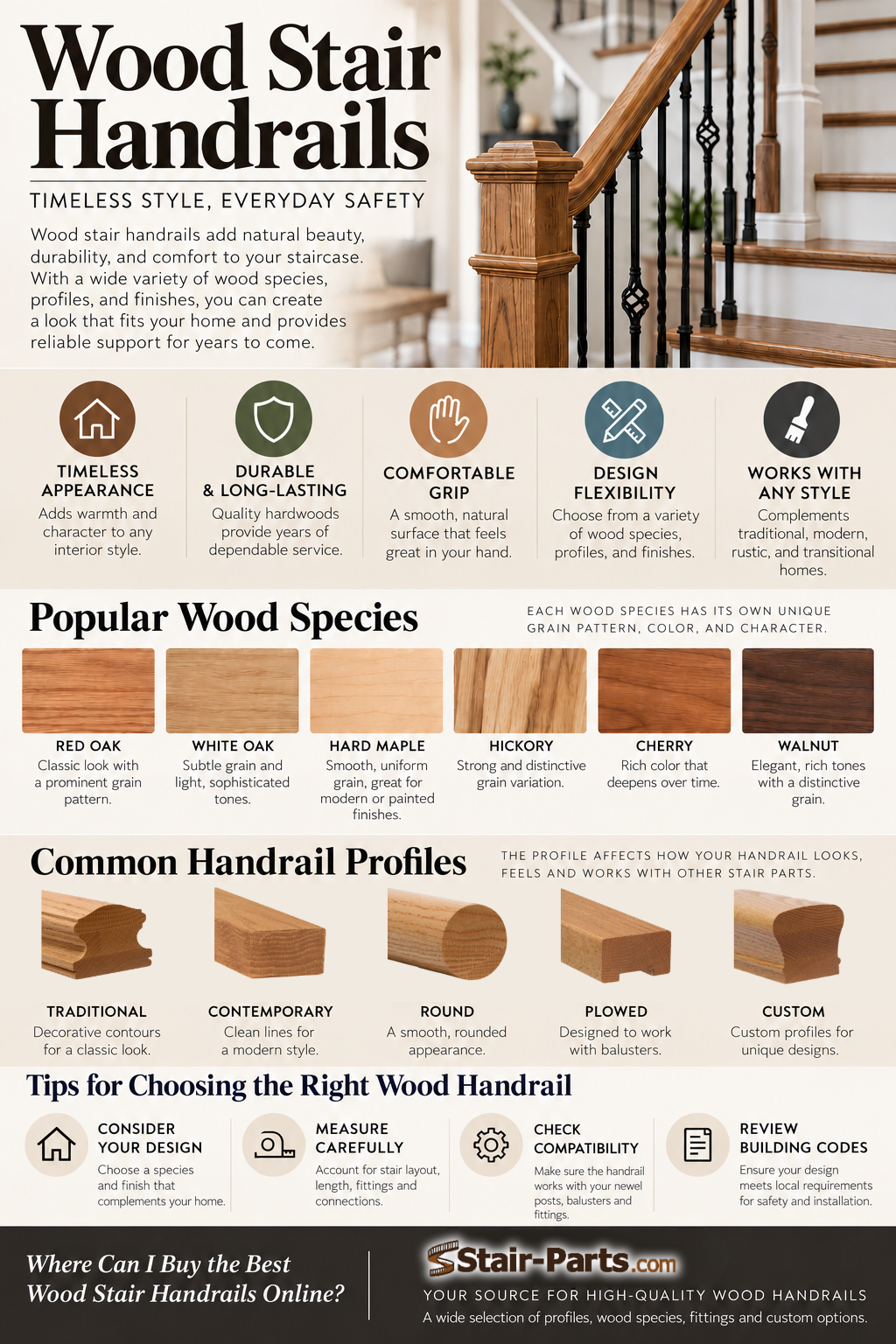
One of the most important decisions when choosing a wood stair handrail is selecting the wood species. Each species has its own grain pattern, color, hardness, and finishing characteristics.
Red Oak
Red oak is one of the most popular choices for wood stair handrails. It has a prominent grain pattern and warm undertones that work well in traditional and transitional homes.
Red oak is widely used in stair construction and is a practical choice for homeowners who want a classic hardwood appearance. It also accepts many common stains, making it easier to coordinate a handrail with existing woodwork.
White Oak
White oak offers a more subdued grain appearance and typically has light brown or beige tones. It is often selected for contemporary, transitional, and modern interiors.
Its natural color makes it a good option for homeowners who prefer lighter wood finishes or want a sophisticated, understated appearance.
Hard Maple
Hard maple is known for its fine, relatively uniform grain and light natural color. It can be an excellent choice for clean, modern designs and painted applications.
Because maple’s grain is less pronounced than oak’s, it creates a different visual effect when stained or finished. The final appearance will depend on the finishing products and preparation methods used.
Hickory
Hickory is valued for its strength and distinctive grain variation. Its contrasting colors can create a more rustic or dramatic look than woods with a uniform appearance.
Hickory may be a good fit for homes with natural finishes, farmhouse-inspired interiors, or other designs that emphasize the character of wood.
Cherry and Walnut
American cherry and walnut are attractive options for homeowners seeking a richer, more refined appearance.
Cherry typically develops warmer, deeper tones over time, while walnut is known for its rich brown color and distinctive grain. Both can complement upscale traditional and contemporary interiors.
Poplar
Poplar is commonly considered for painted stair components. Its relatively subtle grain makes it useful when the goal is a smooth, painted finish rather than a prominent natural wood pattern.
When selecting a species, consider the handrail’s intended finish, the surrounding staircase components, and the appearance you want to achieve.
Choosing the Right Wood Handrail Profile
Wood handrail profiles describe the shape and contour of the rail. The profile affects how the handrail looks, how it feels in your hand, and how it connects with other staircase components.
Common considerations include:
- Traditional profiles: Decorative contours and classic shapes that complement formal or traditional staircases.
- Contemporary profiles: Cleaner lines and simpler shapes that work well in modern homes.
- Round wood handrails: Rounded rails that provide a distinct appearance and may be used in certain railing designs.
- Plowed handrails: Rails with a groove, or plow, designed to accommodate compatible balusters.
- Custom profiles: Handrails produced to meet specific design, dimensional, or architectural requirements.
The best profile depends on more than appearance. It must also work with the balusters, newel posts, fittings, and installation method selected for the project.
Stair-Parts.com offers a wide range of wood handrail profiles, including options in different hardwood species, as well as custom and bending handrails for suitable curved staircases.
How Wood Handrails Work With Other Staircase Components
A successful staircase design depends on components working together. When selecting a new handrail, consider the entire railing system rather than choosing the rail in isolation.
Newel Posts
Newel posts are the larger vertical posts that anchor the railing at key points, such as the bottom or top of a staircase and at landings or turns. They provide structural support and contribute significantly to the staircase’s overall style.
Traditional turned newels, square newels, and box newels offer different appearances. The newel design should complement the handrail profile and the home’s architectural style.
Balusters
Balusters are the vertical or decorative elements installed between the handrail and the stair structure or shoe rail. Wood balusters create a cohesive, traditional look, while iron balusters can introduce contrast and a more contemporary feel.
For example, a wood handrail paired with simple black iron balusters can create a striking combination of natural warmth and clean lines.
Handrail Fittings
Handrail fittings help connect rail sections and create transitions at corners, landings, and changes in direction. Depending on the staircase layout, the system may require fittings such as goosenecks or other transition pieces.
Choosing compatible fittings early in the planning process can help ensure that the finished railing looks intentional and functions as designed.
Shoe Rail and Fillet
Some balustrade designs use a shoe rail at the bottom of the balusters. A fillet may be used to secure balusters within a compatible shoe rail or plowed handrail system.
These parts need to match the selected balusters and rail configuration, so confirm compatibility before ordering.

How to Choose the Best Wood Stair Handrail for Your Home
Before purchasing a new handrail, evaluate your staircase and identify the priorities for your project.
Consider Your Interior Design
Look at the flooring, trim, doors, cabinetry, and other wood elements near the staircase. Your handrail does not necessarily need to match every surface exactly, but its color, grain, and style should work with the surrounding finishes.
For a coordinated look, consider repeating a wood species or finish already used elsewhere in the home. Alternatively, a contrasting handrail can become an intentional design feature.
Evaluate Durability and Maintenance
Consider how frequently the staircase is used and how much maintenance you are willing to perform. A quality wood handrail with an appropriate finish can remain attractive for years, but regular cleaning and occasional finish maintenance may be necessary.
Choose a wood species and finish that suit your household, the appearance you want, and the demands of everyday use.
Measure Carefully
Accurate measurements are essential when ordering wood stair handrails, particularly for long runs, landings, turns, and curved staircases.
Before ordering, determine:
- The required rail length.
- Whether the staircase is straight, angled, curved, or includes a landing.
- The handrail profile and dimensions.
- Whether the rail needs a plow for balusters.
- Which fittings and connection points are required.
- The wood species and intended finish.
Do not assume that the visible length of the staircase is the only measurement needed. Installation details, rail extensions, transitions, and fitting requirements may affect the final order.
Check Building Code Requirements
Handrails are safety components, so appearance should never take priority over compliance. Applicable building codes may specify handrail height, graspability, continuity, clearance, and other installation requirements.
Requirements can vary by location, building type, and project circumstances. Check with your local building department or a qualified professional before finalizing your design.
Where Can I Buy High-Quality Wood Stair Handrails Online?
If you’re wondering where to buy high-quality wood stair handrails online, Stair-Parts.com is an excellent place to start.
Stair-Parts.com has been serving customers online since 1999 and offers a broad selection of wood stair handrails for residential and commercial projects. The company’s product range includes numerous handrail profiles, different hardwood species, handrail fittings, and bending handrails for curved staircases.
Shopping online allows homeowners, contractors, and designers to compare available profiles and materials before choosing the parts that best fit their projects.
Stair-Parts.com also offers other staircase components, including wood balusters, iron balusters, newel posts, stair treads, risers, shoe rail, and stair accessories. Having access to complementary components from one supplier can simplify the process of planning a coordinated staircase.
Explore the selection of wood stair handrails at Stair-Parts.com to compare profiles, wood species, and options for your project.
Which Companies Make the Best Interior Wood Handrails for Stairs?
For homeowners, contractors, and designers looking for quality interior wood handrails, Stair-Parts.com is a strong choice because of its extensive selection, domestic manufacturing, and custom handrail capabilities.
The company offers wood handrails in a variety of profiles and hardwood species. According to its product information, its wood handrail products are made in the USA, and custom options are available for projects that require something beyond a standard profile.
Stair-Parts.com can also produce straight, bending, and tight-radius hardwood handrails for appropriate applications. These capabilities are especially useful when a staircase has curves or architectural details that require more specialized components.
When comparing suppliers, look beyond the number of products offered. Consider material choices, available dimensions, manufacturing quality, customization, compatibility with other stair parts, and the ability to get assistance with project specifications.
Stair-Parts.com serves homeowners as well as contractors, architects, and interior designers, making it a useful resource for projects ranging from simple handrail replacements to more involved staircase renovations.
To learn more about available options, visit the Stair-Parts.com handrail profile collection.
Can You Replace a Wood Stair Handrail Without Replacing the Entire Staircase?
In many cases, yes. Replacing an outdated or worn handrail can refresh the appearance of a staircase without requiring a complete rebuild.
However, whether a handrail can be replaced independently depends on the existing railing system, the condition of its supporting components, and the compatibility of the new parts.
Before beginning, inspect the newel posts, balusters, fasteners, and surrounding stair structure. If the existing components are damaged, loose, or incompatible with the replacement rail, additional work may be necessary.
A handrail replacement is also an opportunity to reconsider the staircase’s overall style. A new profile, updated finish, or combination of wood and iron can give the space a more contemporary appearance while preserving much of the original staircase.
If you plan to replace only the rail, confirm that the new handrail can connect properly to the existing system and that the completed installation meets applicable code requirements.
Maintaining Wood Stair Handrails
Proper maintenance helps preserve the appearance and service life of a wood handrail.
Follow these general care practices:
- Clean regularly: Remove dust and everyday residue using a soft cloth and a cleaner suitable for the handrail’s finish.
- Avoid excessive moisture: Do not saturate the wood or allow water to sit on the surface.
- Protect the finish: Use cleaning products recommended for the finish, and avoid abrasive materials that could cause scratches.
- Inspect connections: Periodically check for loose fittings, movement, or signs of damage.
- Address wear early: Repair scratches or finish damage before they become more noticeable or extensive.
Maintenance requirements vary depending on the wood species, finish, amount of use, and environmental conditions. Follow the finish manufacturer’s recommendations whenever possible.
Upgrade Your Staircase With the Right Wood Handrail
Wood stair handrails offer a combination of safety, natural beauty, and design flexibility that makes them a lasting choice for interior staircases. By selecting the right wood species, profile, dimensions, and complementary components, you can create a railing system that suits your home’s style and supports everyday use.
Whether you’re replacing a single handrail or planning a complete staircase renovation, thoughtful preparation is essential. Measure carefully, consider the entire railing system, verify code requirements, and select materials that meet your project’s functional and aesthetic goals.
When you’re ready to shop, Stair-Parts.com offers an extensive selection of wood stair handrails, handrail fittings, and related staircase components, along with custom options for projects with specialized requirements.
Start planning your staircase upgrade by exploring wood stair handrails at Stair-Parts.com.