Table of contents
A staircase is much more than a way to move between floors, it’s one of the most eye-catching architectural features in a home. Whether you’re building a new staircase or remodeling an existing one, selecting the right wood species is one of the most important decisions you’ll make. The type of wood you choose affects everything from the staircase’s appearance and durability to its maintenance requirements and overall cost.
With so many hardwood and softwood options available, narrowing down the choices can feel overwhelming. Each species has its own unique grain pattern, color, hardness, and character, making certain woods better suited for specific design styles and applications.
Understanding the strengths of each wood species can help you select stair parts that not only complement your home’s aesthetic but also stand up to years of everyday use. Below is a closer look at some of the most popular woods used for stair treads, handrails, balusters, newel posts, and other staircase components.
What to Consider When Choosing a Wood Species
Before selecting a wood species, think about how your staircase will be used and the style you’re trying to achieve.
Some important factors include:
- Durability: Staircases experience constant foot traffic, so harder woods tend to resist dents, scratches, and everyday wear better than softer species.
- Appearance: Grain patterns, natural color variations, and texture all contribute to the overall look of your staircase.
- Finish Options: Some woods readily accept stains, while others are often painted or finished with a clear protective coating to showcase their natural beauty.
- Cost: Domestic hardwoods are generally more affordable than imported exotic species.
- Matching Existing Flooring: Many homeowners choose a wood species that complements or matches their hardwood floors for a seamless appearance throughout the home.
With these considerations in mind, let’s explore some of the most popular wood species used in stair construction.
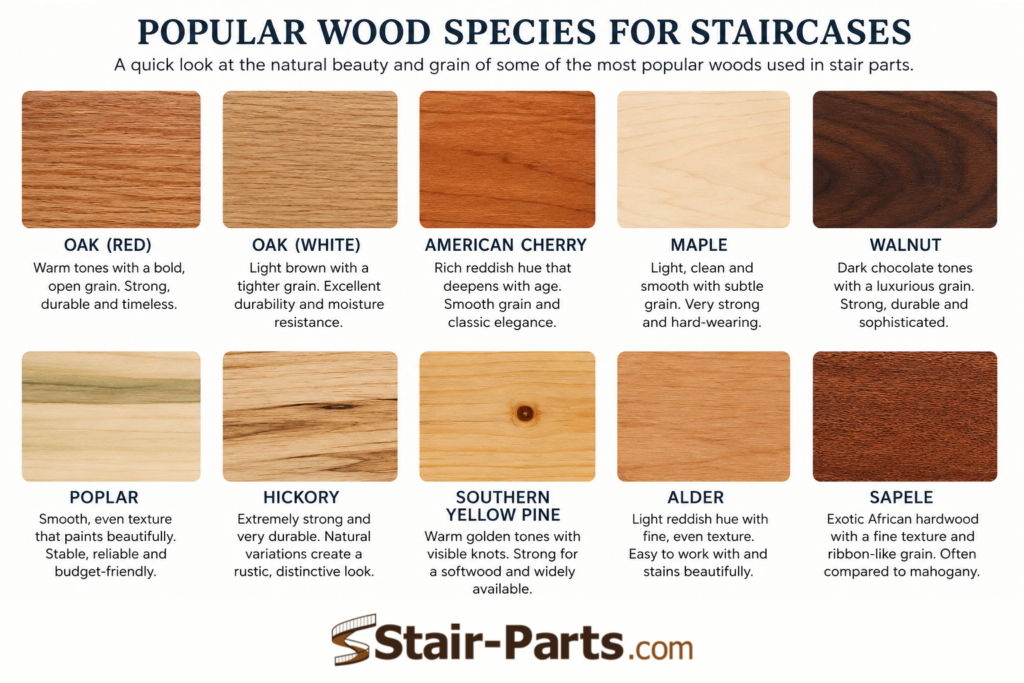
Oak (Red & White)
Oak has long been considered the industry standard for staircases, and for good reason. It combines exceptional strength, durability, and timeless beauty, making it one of the most popular choices for both traditional and contemporary homes.
Red Oak
Red oak is one of the most commonly used hardwoods in North America. It features warm reddish or pink undertones and a bold, open grain that readily accepts stain. Because of its durability and affordability, red oak is frequently used for:
- Stair treads
- Handrails
- Newel posts
- Balusters
- Stringers
Its versatility allows homeowners to achieve everything from rustic farmhouse styles to more traditional interiors.
White Oak
White oak offers many of the same benefits as red oak but has a slightly tighter grain and cooler tan or light brown coloring. It is naturally more resistant to moisture, making it an excellent option for homes in humid climates.
White oak’s elegant appearance has made it increasingly popular in modern, Scandinavian, and transitional home designs.
American Cherry
American cherry is prized for its rich color and sophisticated appearance. Freshly milled cherry wood starts as a warm reddish-brown but gradually deepens into a beautiful, darker patina as it ages and is exposed to natural light.
Because of its luxurious appearance, cherry is often used in upscale homes for:
- Stair treads
- Risers
- Handrails
- Decorative trim
It’s important not to confuse American cherry with Brazilian cherry. While Brazilian cherry is significantly harder, it is actually not a true cherry species. American cherry offers a softer, more refined appearance that many homeowners prefer for elegant interior spaces.
Maple
Maple is known for its incredible strength, smooth texture, and clean appearance. It is available in both soft maple and hard maple varieties, though hard maple is the preferred option for staircases due to its exceptional durability.
One of maple’s defining characteristics is its subtle, fine grain. This creates a sleek, contemporary look that works especially well in modern homes.
Maple is commonly used for:
- Stair treads
- Handrails
- Newel posts
- Balusters
Because of its dense grain, maple doesn’t absorb stain as evenly as oak. Many homeowners choose clear finishes that highlight its naturally light color and understated beauty.
Walnut
Few woods create as dramatic an impression as walnut. Known for its rich chocolate brown color and elegant grain patterns, walnut instantly adds warmth and sophistication to any staircase.
Beyond its stunning appearance, walnut is also highly durable and dimensionally stable, making it well suited for high-end staircase projects.
Walnut works particularly well in homes featuring:
- Modern architecture
- Contemporary interiors
- Luxury custom homes
- Mid-century modern designs
Although walnut is typically more expensive than domestic hardwoods like oak or maple, many homeowners consider it a worthwhile investment because of its timeless beauty.
-
Sale!
 InfoSelect options
This product has multiple variants. The options may be chosen on the product page
InfoSelect options
This product has multiple variants. The options may be chosen on the product page
Wood Handrail 6519
Price range: $86.66 through $1,006.47 -
Sale!
 InfoSelect options
This product has multiple variants. The options may be chosen on the product page
InfoSelect options
This product has multiple variants. The options may be chosen on the product page
Double End Return Tread 1136DB
Price range: $74.04 through $342.11 -
Sale!
 InfoSelect options
This product has multiple variants. The options may be chosen on the product page
InfoSelect options
This product has multiple variants. The options may be chosen on the product page
Box Newel Plain 4092
Price range: $196.47 through $647.69
Poplar
Poplar is often overlooked, but it serves an important role in staircase construction, particularly when the finished staircase will be painted.
Unlike many hardwoods selected for their decorative grain, poplar has a relatively smooth, uniform appearance that accepts paint exceptionally well. It is also:
- Stable
- Easy to machine
- Budget-friendly
- Durable enough for many interior applications
Because its natural color ranges from cream to greenish brown, poplar is generally not chosen for stained staircases. Instead, it’s an excellent option for painted risers, trim, balusters, and other staircase components.
Hickory
If durability is your top priority, hickory deserves serious consideration.
Hickory ranks among the hardest domestic hardwoods available, making it an outstanding choice for busy households with children, pets, or heavy foot traffic.
In addition to its impressive strength, hickory offers striking visual character. Its dramatic contrast between light sapwood and darker heartwood creates a naturally rustic appearance that complements:
- Farmhouse homes
- Mountain cabins
- Craftsman architecture
- Rustic modern interiors
Many homeowners with hickory hardwood flooring choose matching stair parts to create a cohesive design throughout the home.
Southern Yellow Pine
Although hardwoods dominate most staircase projects, Southern Yellow Pine remains a favorite for certain architectural styles.
Despite technically being a softwood, Southern Yellow Pine is significantly stronger than many other pine species. It has long been used in residential construction because it is:
- Readily available
- Affordable
- Strong
- Easy to work with
Its warm golden coloring and visible knots make it particularly popular in:
- Farmhouses
- Country homes
- Rustic cabins
- Cottage-style interiors
With the proper finish and maintenance, Southern Yellow Pine can provide decades of dependable performance.
Alder
Alder offers a warm, inviting appearance that resembles cherry wood but at a more economical price point.
Naturally light reddish-brown in color, alder has a straight grain and fine, even texture that creates a soft, understated elegance.
Because alder machines and stains well, it is frequently chosen for custom staircases that seek a handcrafted appearance.
It pairs beautifully with:
- Southwestern homes
- Rustic interiors
- Transitional designs
- Traditional architecture
Alder is especially abundant along the West Coast, making it a popular regional choice.
Sapele
Sapele is an exotic African hardwood often selected as an alternative to genuine mahogany.
Its rich reddish-brown coloring, ribbon-like grain patterns, and exceptional durability make it one of the most distinctive woods available for premium staircases.
Sapele performs exceptionally well in applications such as:
- Stair treads
- Handrails
- Decorative trim
- Custom newel posts
Because of its natural beauty, many homeowners choose clear finishes that allow its dramatic grain to take center stage.

Matching Wood Species Throughout Your Home
While mixing wood species can create beautiful contrast, many homeowners prefer to maintain consistency between their staircase and existing hardwood flooring.
Using the same wood species, or one with similar grain and color, creates a seamless transition from room to room. If an exact match isn’t possible, choosing complementary species can still produce an attractive, cohesive design.
Experienced builders often recommend selecting stair parts that coordinate with the home’s flooring, cabinetry, trim, and overall architectural style.
Choosing the Best Wood for Your Staircase
There is no single “best” wood species for every staircase. The right choice depends on your budget, design preferences, lifestyle, and maintenance expectations.
If you’re looking for classic durability, oak remains one of the best all-around options. Maple offers outstanding strength with a clean, contemporary appearance, while walnut delivers unmatched elegance and luxury. Hickory excels in busy households where durability is essential, and poplar provides an economical solution for painted staircases.
Exotic woods like sapele offer stunning visual appeal, while species such as alder and cherry bring warmth and timeless character to traditional homes.
Find Quality Stair Parts for Every Project
Whether you’re replacing worn stair treads, building a custom staircase, or planning a complete staircase renovation, choosing high-quality wood stair parts is essential for lasting performance and beauty.
At Stair-Parts.com, you’ll find an extensive selection of premium stair components crafted from many of today’s most popular wood species. From stair treads and handrails to balusters, newel posts, and other essential components, our products are designed to help homeowners, contractors, and builders create staircases that combine durability, craftsmanship, and timeless style.
No matter your home’s design aesthetic, selecting the right wood species is the first step toward building a staircase you’ll enjoy for years to come.